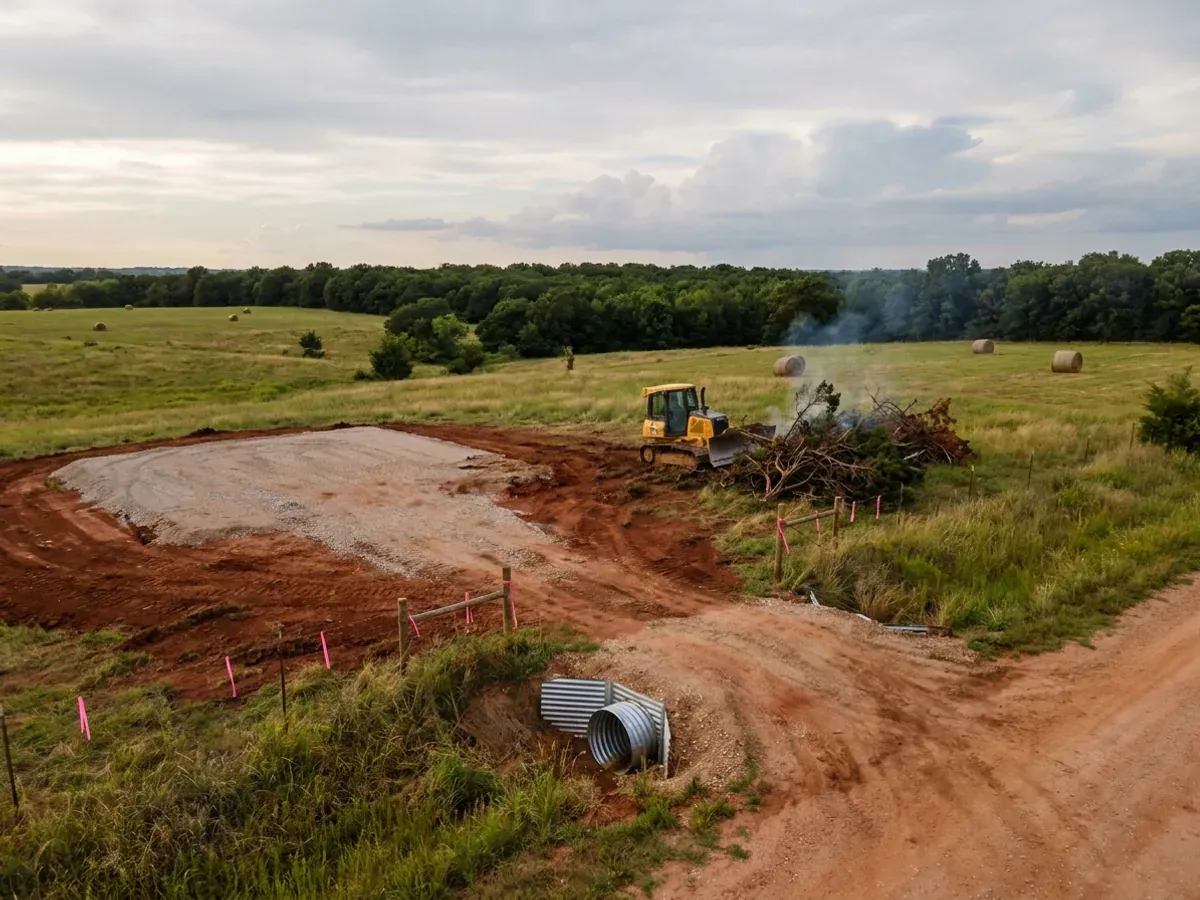
Barndominium Site Preparation in Oklahoma
Site preparation is everything that happens to your Oklahoma land before the foundation: clearing, the entrance and drive, the building pad, drainage, and the soil work the septic system depends on. It is also where the biggest surprises on a rural build hide. Much of the state sits on clay-rich soils that swell when wet and shrink when dry, spring storms can drop heavy rain in hours, and the septic system the lot can use is decided by a soil test. We deal with all of it before a truck with a slab's worth of concrete turns off the road.
Site Preparation: how the work runs
Four stages, in this order. The sequence matters more than it looks: settling who has jurisdiction, the septic soil test and any permits before anything is fabricated is what keeps an Oklahoma build from stalling.
Read the ground
We start with the mapped soils for your parcel on the NRCS Web Soil Survey, walk the land, and look at where water goes in a heavy rain. Where the clay, fill or slope calls for it, a geotechnical firm tests the soil under the building and a licensed land surveyor sets the corners.
Septic soil test
The Oklahoma Department of Environmental Quality decides which septic systems a lot can use from a soil profile test, done by DEQ or a DEQ-certified soil profiler, with at least three holes or pits dug in the dispersal area. We arrange it early, because it can decide where the house goes.
Clear, build the drive and the pad
We clear the building area, build an all-weather entrance and drive that a concrete truck and a loaded steel delivery can use, and build up and compact the pad. On clay, the pad and the moisture under it matter as much as the concrete on top.
Drainage and handover to the foundation
The ground is shaped so water runs away from the building, not toward it, and the pad is checked before forms go in. A slab on clay that stays wet on one side and dries out on the other is how cracks start.
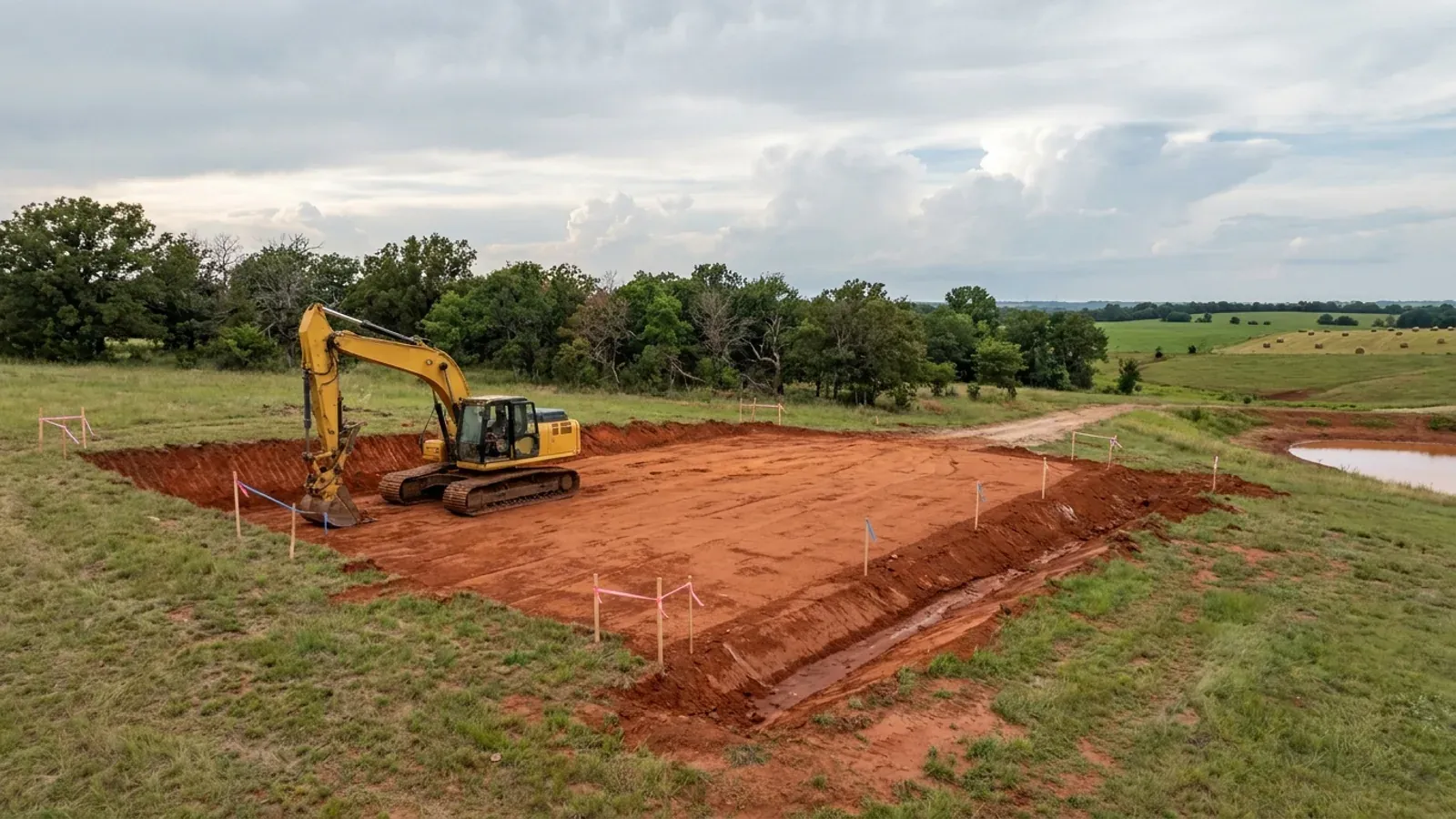
Most of what goes wrong under a slab starts with water and clay
The Oklahoma Geological Survey's soil map describes clayey subsoils across much of central Oklahoma and red soils on shales and mudstones further west, and Oklahoma State University Extension notes that soils with 30 percent or more clay dramatically expand and contract as they wet and dry. Keeping the moisture under a slab even, and the rain running away from it, is the cheapest foundation insurance there is.
Where we deliver site preparation
In Oklahoma the line that matters is usually a city limit. Inside a city you normally have city zoning and a city building department. Outside one, it depends on the county: counties take on zoning and building-code powers only under specific state planning acts, so some permit and inspect houses and many do not. Cross one of those lines and what changes is whether the build is inspected, who reviews the drawings, how the land is zoned and whose snow, wind and frost values the drawings answer to. The septic permit from the Department of Environmental Quality, and the state plumbing, electrical and mechanical codes, go with you everywhere.
Barndominium builders across Oklahoma.
Every city and county we build in has its own answer on permits, septic and design values. The service area pages set out what each one publishes.
What actually decides the price
Square footage is the number everyone leads with, and it is rarely the one that moves a barndominium budget. These four do.
-
Clearing and access
Cedar, post oak and brush take time to clear, and a long drive from the road adds gravel, culverts and grading. Open pasture near the road is the cheapest site; a wooded parcel at the back of the land is not.
-
Soil under the building
Expansive clay, fill or rock near the surface can mean removing and replacing soil, deeper piers or a thicker, stiffer slab. A soils test before design turns an unknown into a number.
-
Drainage and slope
A sloping site needs cut and fill to make a level pad, and water that runs toward the building needs swales or drains to send it round. Heavy spring rain finds every low spot.
-
The septic system the soil allows
The soil test decides between a conventional subsurface system, an aerobic system with spray or drip dispersal, or a lagoon, and each costs differently to install.
Site Preparation in Oklahoma: common questions
8 questions we get asked most often about building in Oklahoma. If yours is not on the list, ask it directly.
Why does Oklahoma red clay matter for a barndominium?
Do I need a soils test?
Who does the septic soil test?
Do you survey the property?
Can you build on land in a floodplain?
How long does site preparation take?
Does the pad need to settle before the slab?
Can I do some of the site work myself?
Sources
- Educational Publications (EP 9, Earth Science and Mineral Resources of Oklahoma, soil map) — Oklahoma Geological Survey
- Managing Soil Compaction (PSS-2244) — Oklahoma Cooperative Extension Service, Oklahoma State University
- Web Soil Survey — USDA Natural Resources Conservation Service
- On-site sewage treatment (Authorization to Construct) — Oklahoma Department of Environmental Quality
Keep reading
The pages that answer the next question this one raises.
Ready to put site preparation against a real plan? Start there and the rest follows.
Tell us about the land
Tell us where the parcel is and what you want on it, and we will come back with who has jurisdiction, what the land needs before it can be built on, and a realistic budget range. Starting the survey costs nothing.